Hello!Welcome to Shanghai Sheeny Metal Materials Co.,Ltd. Website!
Hotline:+86-400-6632276


The Journal of Rare Earths recently published a review article titled "Advanced rare earth oxide-based catalysts for thermal/electrocatalytic purification of gaseous pollutants." The paper, authored by Xiuxian Jiang, Xiao Wang, and colleagues, systematically summarizes research progress on rare earth oxide-based catalysts in the field of gaseous pollutant abatement.
The article notes that nitrogen oxides (NOx), volatile organic compounds (VOCs), carbon monoxide (CO), and sulfur dioxide (SO2) are among the major targets for air pollution control. Catalytic technology is currently a well-established and effective method for treating these gaseous pollutants. However, conventional noble metal catalysts face limitations including high costs and low atomic utilization efficiency.
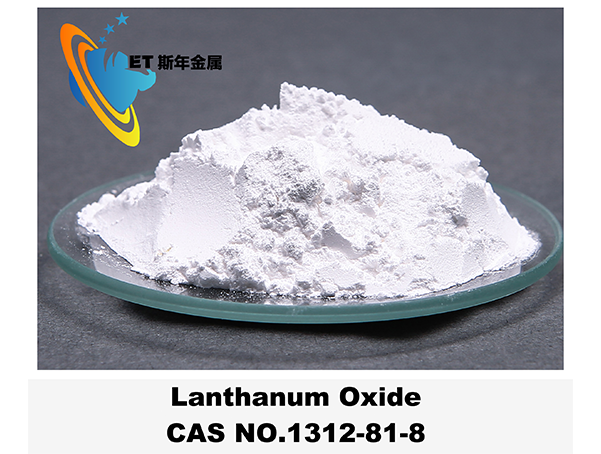
Rare earth oxides have attracted attention in catalysis due to their unique electronic structures and tunable coordination environments. Research indicates that rare earth oxides such as ceria (CeO2) and lanthanum oxide (La2O3) exhibit variable oxidation states, high-density oxygen vacancies, and superior redox capabilities, showing catalytic activity in the abatement of NOx and VOCs. By constructing rare earth mixed oxide systems, such as noble metal/transition metal-rare earth oxide composites, synergistic interactions between components can significantly enhance catalytic efficiency. In such systems, noble or transition metals serve as reactive active sites, while rare earth oxides function as electronic regulators.
The review summarizes common synthesis methods for rare earth oxide-based catalysts, including impregnation and hydrothermal synthesis, and discusses design strategies such as morphology control and active site engineering. Regarding applications, the article analyzes catalyst performance in selective catalytic reduction of NOx, VOC oxidation, and simultaneous removal of multiple gaseous pollutants, focusing on low-temperature activity, stability, and selectivity.
The article also examines the potential of electrocatalytic technology for gaseous pollutant purification. Unlike conventional thermal catalysis, electrocatalysis can operate under ambient conditions and offers the possibility of converting pollutants such as NOx into value-added products like ammonia. Emerging technical approaches including photothermal catalysis and plasma catalysis are also discussed.
The review acknowledges several challenges that remain for the practical industrial application of rare earth oxide-based catalysts, including long-term operational stability, resistance to SO2 and H2O poisoning, and the scaling-up from laboratory synthesis to industrial production.
Finally, the article outlines future research directions, identifying the reduction of noble metal dependence, enhancement of low-temperature catalytic activity, and improved tolerance under complex operating conditions as key factors for the practical deployment of rare earth oxide-based catalysts.

Room 310, Building 1, No. 326, Jinyuan Third Road, Jiading District, Shanghai
Tel : +86-400-6632276
Mobile&Whatsapp : +86 19916550170
Email : sales@eternal-element.com
Scan to wechat :